
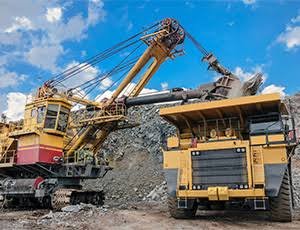
Mining engineers design and create systems that are used to locate, extract, and transport natural resources. They develop and design new mining equipment and make sure that the mining procedures used are safe and efficient. Increasingly, mining engineers focus their attention on creating mining equipment and techniques that are as friendly to the environment as possible.
Required Education|: Bachelor’s degree
Job Skills|: Communication, creativity, mathematics, problem solving.
Median Salary (2017)* |: $94,240 (for mining and geological engineers).
Job Growth (2016-2026)* | 8% (for mining and geological engineers).
Required Education
Mining engineers need at least a bachelor’s degree to find a job, and many research positions require a master’s degree or doctorate. Some courses that students need to take cover geology, mining operation, mine design, metallurgy and environmental reclamation, among others.
Licensing Requirements
Any mining engineer who works in the public sector must have a state license. Requirements vary by state, but typically include a combination of education and experience, and a series of tests.
Skills Required
Mining engineers must have a strong background in math and science, good organizational skills and strong problem-solving abilities. Creativity and the ability to communicate effectively are also needed.
Career and Economic Outlook
The number of jobs in the mining and geological engineering field is expected to expand about 8% from 2016-2026, in line with the national average, according to the U.S. Bureau of Labor Statistics (BLS, http://www.bls.gov). The BLS also indicated that the median yearly salary for mining and geological engineers was $94,240 in 2017.
 DIGITAL MARKET
You must be logged in to post a comment.